Mahalaya 2026 will be observed on October 10, marking an important point in the Bengali festive calendar and signalling that Durga Puja is drawing closer. In 2026, Maha Shashthi falls on October 16, just six days after Mahalaya.
But long before the first puja rituals begin, Bengal seems to change in its own unmistakable way. The fragrance of Shiuli fills the early morning air, white Kash Phool appears across open fields and the familiar beat of Dhaak slowly becomes part of the festive soundscape. These are more than seasonal details for many people, they serve as a reminder that Puja is almost here.
1. Shiuli Flowers Begin To Bloom
Few things capture the feeling of Mahalaya quite like Shiuli flowers. The small white blossoms with their orange stems are closely associated with autumn and the arrival of Durga Puja in Bengal.
Often seen scattered beneath trees in the early morning, Shiuli brings a distinctive fragrance to the season. Its appearance has become one of the most recognisable natural signs that the festive days are approaching.
2. White Kash Phool Covers The Fields
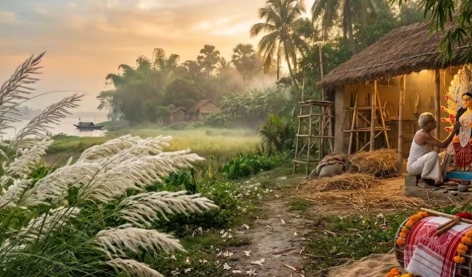
The sight of tall, feathery Kash Phool swaying in the breeze is another unmistakable marker of the festive season.
The white blooms stand out against the autumn landscape and have long been culturally associated with Durga Puja in Bengal. Alongside Shiuli, Kash Phool has become part of the visual identity of the season, creating that familiar autumn atmosphere associated with Maa Durga’s arrival.
3. The Sound Of Dhaak Returns
Then comes the sound that can instantly change the mood, Dhaak.
The traditional Bengali drum is deeply connected with Durga Puja. Its powerful beats become increasingly familiar as preparations gather pace, eventually forming one of the defining sounds of the celebrations.
From pandals and neighbourhood pujas to traditional performances, Dhaak accompanies several moments of the festive season.
4. Mahishasura Mardini Fills The Dawn
For countless Bengali households, Mahalaya morning begins before sunrise with the familiar sound of Mahishasura Mardini.
The iconic programme, associated with the voice of Birendra Krishna Bhadra, combines Sanskrit recitation, devotional songs and narration centred on Goddess Durga. Its early-morning broadcast has been closely associated with Mahalaya for generations.
5. Chokkhu Daan Gives The Idol Its Final Touch
Mahalaya is also associated with Chokkhu Daan, the traditional ritual of painting the eyes of Goddess Durga’s idol.
The eyes are among the most distinctive features of the idol, and the ritual is traditionally performed around Mahalaya in several Bengali Durga Puja traditions.
In Kolkata’s Kumartuli, where generations of artisans create Durga idols, the ritual is particularly associated with the final stages of preparation.
6. The Ghats Become Part Of Mahalaya Morning
Mahalaya is not only about the excitement of the upcoming Puja. It is also closely connected with remembrance of ancestors.
On Mahalaya Amavasya, many devotees observe Tarpan, offering prayers and water in memory of their ancestors. Riverfront ghats can become important gathering points on the morning, particularly in Kolkata.
7. The City Starts Looking Like Puja Is Coming
Perhaps the biggest sign is one that cannot be captured in a single object.
As Mahalaya approaches, preparations become increasingly visible. Durga idols near completion, pandal work, festive decorations and the return of familiar Puja sounds gradually transform neighbourhoods.
By the time Mahalaya arrives on October 10, the countdown has already begun. With Maha Shashthi scheduled for October 16 in 2026, the gap between Mahalaya and the main Puja days is short.
And that is what makes these seven symbols so special. Shiuli, Kash Phool, Dhaak, Mahishasura Mardini, Chokkhu Daan, Tarpan and the changing festive landscape each tell the same story in their own way, Durga Puja is almost here.