







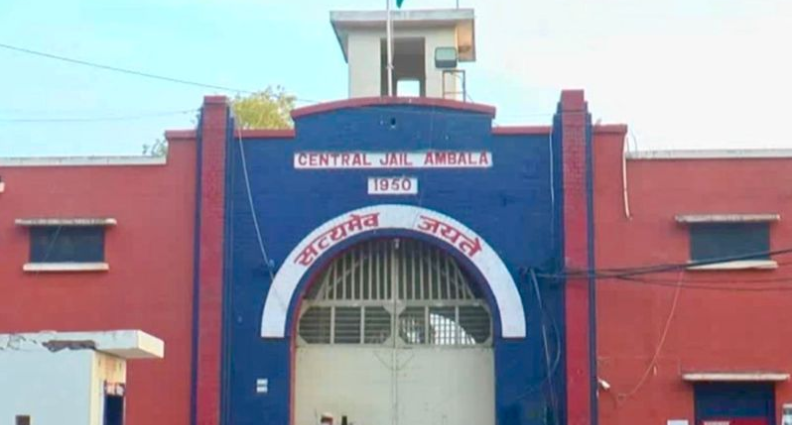
With the Shaheed Smarak dedicated to freedom fighters of the First War of Independence opening in Ambala, demands have resurfaced for preserving the historic Central Jail and developing it as a national-level monument.
Rohit Jain, Member Secretary of the Disciplinary Committee of the Haryana Pradesh Congress and president of the District Bar Association, has submitted a memorandum to the Chief Minister, seeking national monument status for the prison and its conversion into a museum and research centre.
Built in 1872 as a sub-jail, the prison was upgraded to a district jail in 1930 and granted Central Jail status in 1947. Jain said the institution was an important witness to the sacrifices of freedom fighters and the atrocities committed during British rule.
“Ambala Central Jail is not merely a prison; it represents a significant chapter in the history of India’s freedom struggle,” he said, adding that its historical importance went beyond the fact that several revolutionaries were imprisoned and executed there.
According to Jain, several prominent freedom fighters and revolutionaries were associated with the jail. Basant Kumar Biswas, a young revolutionary, was hanged there. On September 3, 1915, 12 persons were executed by the British on charges of participating in a military uprising.
Freedom fighter Sucheta Kriplani, Maulana Sabri, Amar Kaur, sister of Shaheed Bhagat Singh, and Rajkumari Amrit Kaur were also lodged in the prison, he said. Nathuram Godse and Narayan Apte were subsequently executed there.
Jain claimed that the gallows used for the execution of Godse and Apte still existed within the jail premises. As many as 29 persons had been executed there since Independence, with the last execution taking place on June 21, 1989, he added.
Bar association members Iqbal Singh, Gagan Kohli and Sandeep Sharma, who accompanied Jain, said the government should take similar steps to preserve Ambala Central Jail as had been undertaken for the Cellular Jail in the Andaman and Nicobar Islands.
They pointed out that proposals to shift the jail due to administrative and security concerns made it even more important to protect its historic structure.
Jain has urged the government to constitute a committee comprising historians, researchers and archaeological experts to document the jail’s history and its association with freedom fighters.
He also sought preservation of the historic execution chamber and cells where revolutionaries were imprisoned. A signature campaign will be launched to mobilise public support for the demand, he said.