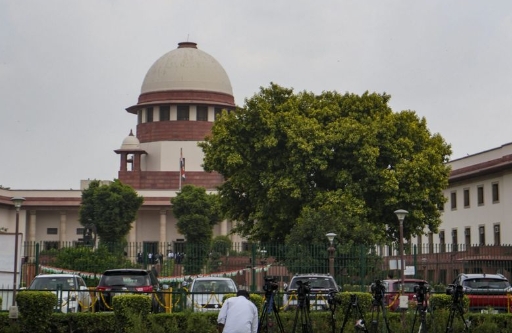
Ruling that the confession statement of an accused made before a police officer cannot be the basis for detaining him under the National Security Act (NSA), 1980, the top court on Tuesday quashed the detention of Mulla Afroz, accused of being the mastermind behind the 2024 Sambhal violence.
The Uttar Pradesh Police invoked the NSA against Afroz in October 2025 for his alleged role in the 2024 communal violence in Sambhal. The detention order was passed on 13th October, 2025 and confirmed on 28th November, 2025 for a period of one year and was set to expire soon.
However, quashing his NSA detention, a Bench of Justice Dipankar Datta and Justice Sheel Nagu said, “Appellant shall be released forthwith, unless his custody is required in connection with any other case.”
Preventive detention has always been regarded as an exceptional measure and, therefore, must be invoked with the utmost circumspection and only in those rarest of rare cases where the circumstances genuinely warrant such an exercise, the Bench said.
The top court ordered the State of Uttar Pradesh to pay Rs 10 lakh appellant Afroz within a month.
“Appellant has already suffered considerable loss of liberty, even while being granted bail in all the cases relating to the incident in which he featured as an accused. In such circumstances, the process was made a punishment. We consider it prudent to impose costs of Rs 10 lakh on the State for being made over to the appellant within a month from the date of this judgment,” the top court ordered.
It ruled that a confessional statement made before the police can’t be regarded as trustworthy evidence and hence it had to be excluded from consideration against the maker of such a confessional statement.
“We are of the considered opinion that a confessional statement made before a police officer cannot, by itself and in the absence of any independent material lending support thereto, constitute a basis for forming the subjective satisfaction necessary to sustain an order of preventive detention. To permit such a course would be to allow a detention order to rest upon a foundation which the law itself regards with suspicion and excludes from evidentiary consideration,” the Bench said.
Allowing Afroz’s appeal against the Allahabad High Court’s order, the top court said, “…we are of the considered opinion that the impugned judgment and order of the High Court, as well as the detention order and confirmation order cannot be sustained in law and are, accordingly, set aside.”