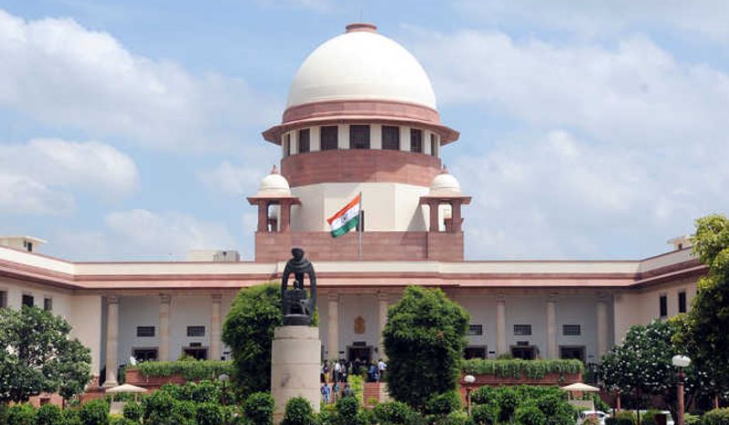
The Supreme Court on Monday agreed to hear a plea seeking direction to the Election Commission to implement a biometric identification system based on fingerprints, facial features or iris scans at polling stations to prevent duplicate voting.
A Bench led by Chief Justice of India Surya Kant made clear that the prayer sought in the plea can’t be considered for the current state Assembly elections in some states.
“Prima facie, the nature of reliefs sought cannot be considered for the ensuing elections in some of the states. However, whether such a recourse deserves to be followed for the next parliamentary elections and/or elections of state legislatures needs to be examined,” said the Bench which also included Justice Joymalya Bagchi.
The order came after Upadhyay submitted that the proposed system would serve as a preventive mechanism against electoral fraud.
Pointing out that Aadhaar-based identification has already been recognised as a valid proof of identity under the Representation of the People Act, the PIIL submitted that biometric verification at polling stations could be implemented on similar lines.
Acknowledging that implementing such measures in the immediate upcoming Assembly elections may not be feasible, Upadhyay contended that the biometric identification system could be introduced in future elections to check electoral malpractices such as proxy voting.
Describing biometric identifiers as “unique and incapable of being fabricated”, the petitioner said such a technology would give effect to the principle of “One Citizen, One Vote” in its truest sense.
The Election Commission can implement such measures by exercising its plenary powers under Article 324 of the Constitution, Upadhyay submitted.
Noting that the proposal would require major changes in the rules governing elections and would also involve a significant financial burden, the Bench said the Election Commission had plenary powers to ensure free and fair elections.
Upadhyay said he filed the PIL after the Election Commission failed to act on a representation submitted on March 28, 2026 for implementation of fingerprint and iris-based biometric identification at polling booths to ensure free and fair elections.
Biometric authentication of voters at polling booths would uphold the constitutional mandate of free and fair elections and enhance the credibility of the electoral system by ensuring that only genuine and duly registered electors were permitted to cast their votes, he submitted.