








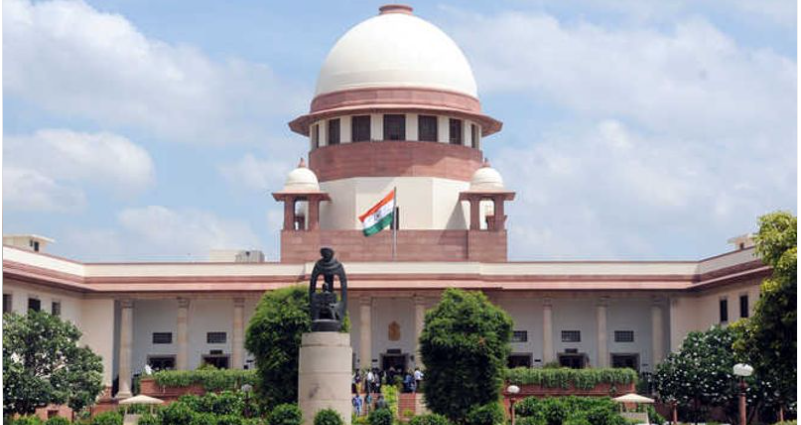
A part-heard Supreme Court case concerning nationwide scrutiny of the functioning, funding and regulation of private universities, which was being heard by a Bench led by Justice A. Amanullah, has been reassigned to a newly constituted three-judge Bench headed by Justice Vikram Nath.
The case, titled Ayesha Jain v. Amity University Noida & Ors., was previously being heard by a Bench, comprising Justice A. Amanullah and Justice N.V. Anjaria.
On September 17, the Bench had directed private universities across India to disclose their audited financial records for the preceding five years, utilisation of funds, fee structures, surplus investments and payments made to persons not directly involved in educational functions.
It had also directed the Centre, states and Union Territories to file affidavits through their respective Chief Secretaries after obtaining the relevant details from the universities and colleges concerned.
However, without assigning any reason for the change, the matter has now been listed before a Bench, comprising Justice Vikram Nath, Justice R. Mahadevan and Justice Aparesh Kumar Singh for hearing on November 19.
The case originated in 2025, when petitioner Ayesha Jain approached the top court alleging harassment by officials of Amity University, Noida, after she legally changed her name from Khushi Jain to Ayesha Jain.
The Justice Amanullah-led Bench, however, expanded the scope of the petition and initiated a nationwide exercise to scrutinise how private universities are established, funded, governed and regulated.
In November 2025, the Bench had directed the cabinet secretary, the chief secretaries of all states and Union Territories and the Chairman of the University Grants Commission (UGC) to personally file affidavits detailing various aspects of private universities, including land allotments, statutory exemptions and the composition of their governing bodies.
Justice Amanullah had expressed strong displeasure over the Centre’s response, which had been filed through the Higher Education Secretary instead of the Cabinet Secretary.
“We make it clear that no private university shall be allowed to be run as a profit-making institution. It has to serve a purpose with some sort of a cushion so that its finances/resources are responsibly managed to ensure smooth functioning of the institution and that the teaching and non-teaching employees are compensated suitably,” the Justice Amanullah-led Bench had observed in its September 17 order.