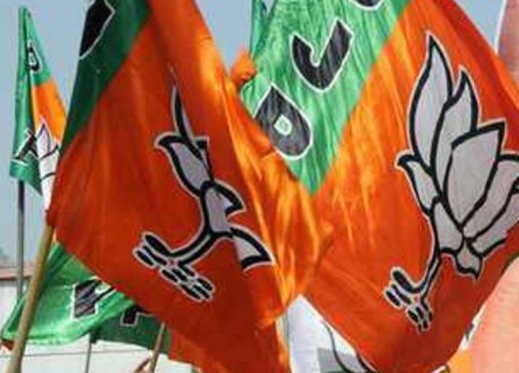
The Uttar Pradesh unit of the Bharatiya Janata Party (BJP) has put another piece of its 2027 election machinery in place, this time expanding the pool of leaders tasked with taking the party’s political and governance message to the public.
On Saturday, state BJP president Pankaj Chaudhary announced 31 state spokespersons, 25 media panelists, two media-chat representatives and regional media teams, expanding the party’s communication structure just as its wider organisational preparations for the Assembly elections gather pace.
The official list gives 31 spokespersons, including Dr Samir Singh, Kaushalendra Patel, Manish Shukla, Hari Bajpai, Ujjwal Kishore, Pankaj Tripathi, Lalji Nigam, Anand Dubey, Anveesh Tyagi, Alok Verma, Anila Singh, Sadhvi Diwakar, Sanjay Chaudhary, Ashok Pandey, SN Singh and Manoj Paswan, among others.
The two media co-conveners are Himanshu Dubey and Deepak Baghel. The 25-member panellist list includes Amit Valmiki, Kaushalendra Kannauj, Rajvendra Singh, Shashank Dwivedi, Ravi Shankar, Abhay Pratap Singh, Gaurav Maheshwari, Chandramohan Chaubey, Pallavi Singh, Aparna Dixit, Raj Kumar Raju, OP Mishra, Ashok Nagar, Govind Gupta and Jai Ram Singh, among others.
The appointments come as the BJP holds a two-day organisational meeting in Mathura on October 3 and 4, where the national and state leadership is expected to discuss the broad framework of its preparations for the 2027 Assembly elections. Earlier, BJP national president Nitin Nabin had held organisational meetings on September 23-24.
The expanded communication structure gives the party a larger pool of leaders to articulate its positions on different issues, defend the government’s record and respond to opposition parties across television, digital platforms and regional media.
From organisational overhaul to message management
The media appointments follow a series of organisational changes by the UP BJP. The party has already reworked its state organisation, frontal wings and social-media structure as it prepares for the 2027 contest. Its new state organisation has also been described as an attempt to balance caste, regional, gender and generational representation.
That sequence suggests that the BJP is not treating media management as a standalone exercise. It is building the communication layer after restructuring the organisation that will generate the political messaging on the ground.
The development also comes amid an increasingly competitive narrative battle in Uttar Pradesh, with the BJP, Samajwadi Party and Congress sharpening their organisational and digital preparations ahead of the polls. Congress has separately changed its state leadership, while the BJP and SP have increasingly used digital and AI-generated content to shape political messaging.
For voters, the significance is less about the number of spokespersons than what they indicate which is the 2027 campaign is moving from preparation behind the organisation to a more visible contest over what issues dominate public conversation and how governments’ records are explained, challenged and defended.