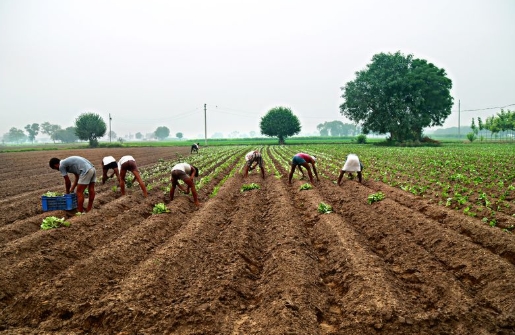
In a major push to diversify cropping patterns and enhance farmers’ income, the Haryana Government has launched the ‘Subsidy Provision for Cultivation of Horticultural Crops’ scheme, offering financial assistance of up to Rs 1.4 lakh per acre for horticulture cultivation.
Under the scheme, farmers cultivating fruits, vegetables, flowers, spices and aromatic plants will receive subsidies for adopting horticulture-based farming practices. According to Department of Horticulture, the initiative is aimed at encouraging crop diversification and promoting high-value cultivation across the state.
Farmers can avail benefits for establishing new fruit orchards and cultivating spices on up to five acres. For vegetable cultivation, general category farmers are eligible for assistance on up to five acres, while Scheduled Caste farmers can claim benefits for up to one acre. Subsidies for flower and aromatic plant cultivation are also available for a maximum of five acres.
Officials said subsidy support for new fruit orchards ranges from Rs 24,500 to Rs 1.4 lakh per acre, depending on the crop. Vegetable growers will receive Rs 15,000 per acre, while Scheduled Caste farmers will be entitled to Rs 25,500 per acre. However, the benefit will be available only to farmers adopting integrated cultivation methods such as mulching, drip irrigation, low tunnels or bamboo staking.
For other horticultural crops, subsidies range between Rs 15,000 and Rs 30,000 per acre for spices, Rs 8,000 and Rs 40,000 per acre for flowers, and Rs 8,000 per acre for aromatic plants. The government said all incentives will be transferred directly to beneficiaries’ bank accounts to ensure transparency.
To avail of the scheme, farmers must be registered on the Meri Fasal-Mera Byora portal and Hortnet. Applicants will also need to submit their Parivar Pehchan Patra (PPP), bank account details and, where applicable, a Scheduled Caste certificate.
The department has urged farmers to take advantage of the scheme, stating that horticulture offers higher returns and can play a key role in increasing rural incomes while reducing dependence on traditional crops.