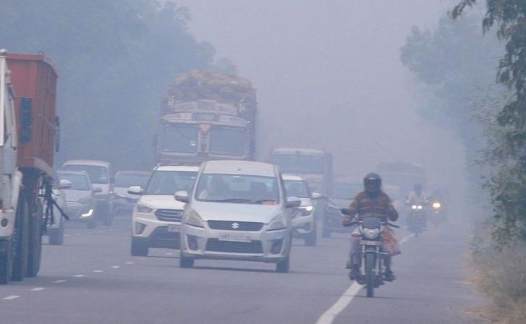
The Delhi Government has begun a hyperlocal crackdown on air pollution ahead of winter, with the district administrations ordering to map pollution hotspots and investigate sources within a 3-km radius, effectively putting a geographical boundary around responsibility for dirty air.
Environment Minister Manjinder Singh Sirsa, during reviews of East, North-East, South-East and South Delhi, directed officials to use air-quality monitoring data to identify problem locations and prepare source-specific action plans, naming the responsible agency and fixing a deadline for corrective action. This was first reported by The Tribune earlier during Sirsa’s exclusive interview where he discussed future plans for curbing pollution in the state. The approach moves beyond treating Delhi’s pollution as a single city-wide problem. At each hotspot, officials will examine road dust, traffic congestion, vehicle emissions, construction and demolition, unauthorised parking, exposed surfaces and waste or biomass burning. Where required, pollution-generating activities within the surrounding 3-km zone will also be assessed.
Oct 31 deadline puts roads under microscope
The government has set October 31 as the target for completing feasible pending road and civil works, including pothole repairs and treatment of the exposed or “brown” areas. Where other projects prevent immediate road restoration, agencies have been told to continue water sprinkling and other dust-suppression measures.
The emphasis on roads is significant. Delhi’s own dust-control material cites studies attributing a substantial share of the PM10 emissions to road dust, while recent hyperlocal research has also found strong associations among particulate pollution, road dust, construction and open burning.
The immediate test, therefore, will not be the number of hotspots mapped, but whether each hotspot produces a measurable reduction in dust, congestion and particulate pollution before the winter inversion season.
Officials have been asked to submit action-taken reports, with progress due for review within 15 days.