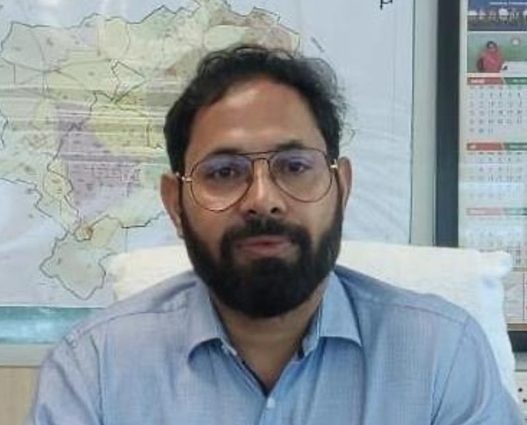
Gurugram Metropolitan Development Authority (GMDA) CEO PC Meena has said Gurugram will fight the monsoon by holding rain and recharging water table, not just building bigger drains. In a conversation with The Tribune, he speaks about hotspots, spending and porosity shift.
How would you rate GMDA’s monsoon performance, and on what basis?
There is an improvement, but not every waterlogging problem has been solved. We go by outcomes: hotspots are down from around 90 in 2019 to about five major ones. We have added over 13 km of drainage, restored about 12 km of natural creeks and Wazirabad and Ghata lakes, desilted over 70 km of master drains and improved over 1,500 road gullies. Despite over 200 mm of rainfall in three days, water mostly receded within an hour, and within two to three hours at four or five locations.
A lot of money has been spent on drainage and quick fixes. Why does Gurugram still flood?
GMDA has spent around Rs 290 crore on drainage infrastructure since 2017-18. Infrastructure deficit, rapid urbanisation, intense rainfall and lost natural permeability add up. Gurugram’s built-up area has grown nearly 64% in a decade, so bigger drains cannot be the only answer. We must hold, absorb, recharge and retain rain, and then route the excess to an outfall.
GMDA was created in 2017 to fix the infrastructure deficit. Has it delivered?
There is substantial progress, but the mandate continues as Gurugram keeps growing. GMDA’s role now spans drainage, roads, water supply, sewerage, mobility, traffic decongestion, CCTV surveillance and technology-enabled infrastructure. In drainage and ecology, we have restored four major natural creeks, restored Wazirabad and Ghata lakes, taken up Sukhrali pond restoration and started major drains such as Leg-4. Much more remains: completing network connectivity and removing bottlenecks to build infrastructure that is resilient.
The MCG Commissioner and you were out on flooded roads.
Field presence is about deciding in real time. A dashboard shows a location is flooded; being there shows why. One visit led to camera-based inspection and desilting of drains, with encouraging results.
GMDA is called a landing pad for retired officers, not a lean execution body.
GMDA runs projects across drainage, roads, water supply, sewerage and mobility. The test is timely decisions, proper execution and tangible improvement. Delays must bring accountability. Whether to retain an officer or hire a new one depends on what is best for the city.
This is your second term. What structural change is real evolution?
The shift to integrated, technology-driven, outcome-based urban management. We are implementing at scale what we planned during my earlier stint — treating the city as an interconnected system, with data, field verification and continuous monitoring. Road widening should not mean cutting green belts; where feasible, we should opt for engineering solutions.
Is the porosity-based approach a genuine pivot?
Yes, it is a vital long-term shift. Bigger drains cannot solve every rainfall problem; we must restore the city’s ability to absorb and recharge rain through harvesting, permeable surfaces, lowered green belts, bio-swales, lakes and ponds. Along the Aravalli foothills, we want to hold part of the runoff in green belts, ponds and recharge pits. We have created a dedicated Blue and Green Infrastructure Wing.
What was your biggest challenge this monsoon, and what was the achievement?
Intense rain and an interconnected network where one bottleneck can affect several kilometres. We are examining bio-swales by lowering select green belts, and lakes in open spaces at Manesar. At Tau Devi Lal Stadium, we are exploring an underground retention tank and lake instead of the proposed mini-golf course. Waterlogging has reduced significantly in some areas, but the benchmark must move from faster drainage to zero recurrence.
What is the multi-year roadmap, and what if there is another CEO transition?
The roadmap must be bigger than any officer, so we are institutionalising it. Phase I: drainage works, desilting, missing links and GIS-mapping. Phase II: stronger master drains and outfalls, more recharge and retention. Phase III: less load on drains through nature-based solutions and restored water bodies; and phase IV: an integrated, climate-resilient system with predictive monitoring. Projects, approvals, GIS data and processes must outlive individual tenures.