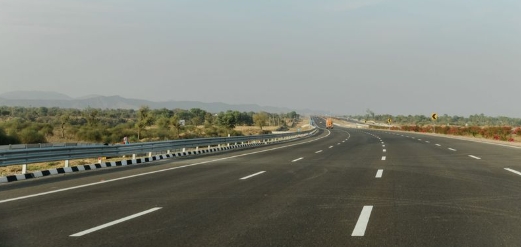
After nearly a decade of delays, Delhi is finally set to open one of its most long-awaited missing road links, with Barapullah Phase III scheduled to be dedicated to the public on September 29. Union Home Minister Amit Shah will inaugurate the corridor.
The elevated corridor will connect Mayur Vihar Phase I with Sarai Kale Khan, plugging the missing link in the existing Barapullah network and creating a signal-free route towards central and south Delhi, including the AIIMS area.
For thousands of daily commuters from East Delhi and adjoining parts of the National Capital Region, the significance is less about the flyover itself and more about what it removes from the journey – repeated intersections, traffic bottlenecks and dependence on surface roads.
The project was sanctioned in 2014 and construction began in 2015, with completion originally targeted for 2017. It subsequently ran into technical, environmental, land and procedural hurdles and repeatedly missed deadlines. Its revised cost has risen to about Rs 1,635 crore, from the original sanctioned cost of around Rs 1,261 crore.
The corridor is about 3.5-km long, according to recent project reporting, and joins the existing Barapullah system at Sarai Kale Khan. The resulting connectivity is expected to make the journey from East Delhi to AIIMS substantially more direct. The government has indicated a travel time of around 15 minutes for the Mayur Vihar-AIIMS movement under suitable traffic conditions.
The project also incorporates a dedicated cycle track, while its Yamuna crossing was designed with long spans to reduce interference with the floodplain.
The September 29 opening, if completed as scheduled, therefore marks more than another flyover inauguration, it closes a long-standing gap in Delhi’s east-south road network.