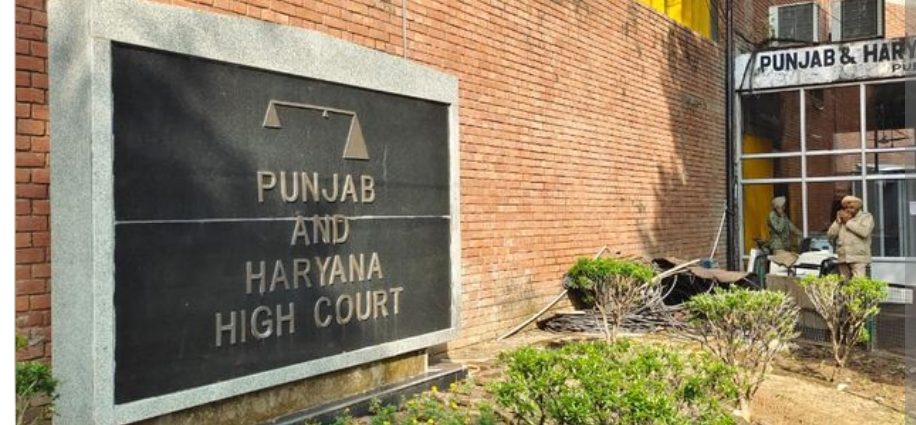
For sums smaller than a monthly grocery bill, two retired employees spent nearly five years in litigation—only for the Punjab and Haryana High Court to finally step in, quash the recoveries from their pensions, and order Rs 50,000 compensation each for the harassment caused. The compensation is nearly 100 times the recoveries of Rs 516 and Rs 1,051 sought from their pensions.
The order came as Justice Harpreet Singh Brar allowed two writ petitions and set aside the impugned recovery orders while directing the Punjab State Power Corporation Limited (PSPCL) to restore pensionary benefits with arrears, refund the recovered amounts with 6 per cent interest, and pay compensation within two months. The court also directed recalculation of pension by granting the benefit of the 23-year advance promotional increment.
Calling out the sheer disproportion involved, Justice Brar observed: “The impugned action ordering recovery of a paltry sum of Rs 1,051 and a sum of Rs. 516 from the pension of a retired employee, is wholly disproportionate and unworthy of judicial time.” The Bench added that the authorities had “mechanically invoked inapplicable instructions, reflecting a litigation-centric approach devoid of due application of mind.”
Referring to the broader institutional cost of such actions, Justice Brar asserted: “Forcing a pensioner to litigate over such a trivial amount is contrary to public policy, frustrates the objective of reducing docket congestion, and inflicts avoidable psychological distress.”
Terming the conduct “arbitrary and oppressive”, Justice Brar asserted that such arbitrary and oppressive conduct deserved “unequivocal deprecation” and warranted the imposition of exemplary costs to deter its recurrence.
Justice Brar’s Bench, during the course of hearing, was told that the controversy itself arose from the grant of an advance promotional increment on completion of 23 years of service under a finance circular. The entitlement accrued in 2007, while the benefit was actually extended much later in 2019 pursuant to court directions — by which time the employees had already been promoted in 2014.
Going into the technicalities of the matter, Justice Brar observed that the circular stipulated absorption of advance promotional increment in the next regular promotion. Such absorption would arise only where the grant of advance increment preceded the promotion and operated as an interim benefit. “However, in the present case, although the entitlement accrued in 2007, the actual financial benefit was granted much later, and the promotion had already taken place in 2014,” the court observed.
Allowing the petitions, Justice Brar quashed the impugned recovery orders issued in October 2020 before directing the respondents to recalculate and pay the pension by granting them benefit of the 23-year advance promotional increment along with the arrears. The refund of the amount recovered was ordered to be computed from the date of recovery till the date of disbursement.