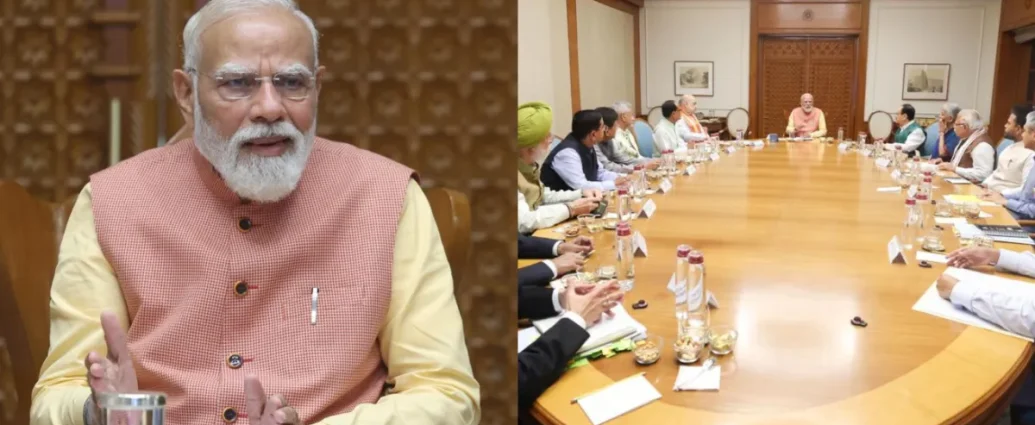
Prime Minister Narendra Modi has directed that all efforts must be made to safeguard citizens from the impact of the ongoing Middle East conflict. The directive was issued during a meeting of the Cabinet Committee on Security (CCS), the second such review chaired by the prime minister amid the Iran war.
The meeting focused on key sectors including energy, agriculture, fertilisers, aviation, shipping and logistics, as part of efforts to assess preparedness and response measures, the prime minister said in a post.
According to a statement from the Prime Minister’s Office, the cabinet secretary briefed the meeting on steps taken to ensure the supply of LPG and LNG, as well as adequate power availability. It added that sources for procuring LPG and LNG are also being diversified, with new inflows being secured from different countries.
Union ministers Rajnath Singh, Amit Shah, S Jaishankar, Nirmala Sitharaman, Piyush Goyal, Shivraj Singh Chouhan, J P Nadda, Ashwini Vaishnaw, Manohar Lal Khattar, Pralhad Joshi, Kinjarapu Rammohan Naidu and Hardeep Singh Puri were among those who attended the meeting. National Security Adviser Ajit Doval, the prime minister’s principal secretaries P K Mishra and Shaktikanta Das, and Cabinet Secretary TV Somanathan were also present.

Last Sunday, in his monthly radio programme Mann Ki Baat, Prime Minister Narendra Modi described the situation arising from the ongoing “fierce war” in West Asia as challenging and urged citizens to come together to overcome the difficulties. He cautioned against politicising the crisis, saying there is no place for self-serving politics in such circumstances, and warned that spreading rumours could cause significant harm to the country.
Second CCS meeting on Iran war
On March 22, Modi held a similar meeting with the same group of ministers and officials to review the evolving situation linked to the West Asia conflict. The discussion included a detailed assessment of the availability of essential supplies for citizens, including food, energy and fuel security. He noted that the conflict was impacting the entire world in different ways and stressed the need to protect citizens from its effects.
The prime minister directed all arms of the government to work in coordination to minimise inconvenience to the public. Earlier, on March 12, he had said the war in West Asia had triggered a global energy crisis, calling it a test of national character that must be addressed with peace, patience and greater public awareness. He also emphasised that the government is working continuously to tackle disruptions in international supply chains.