
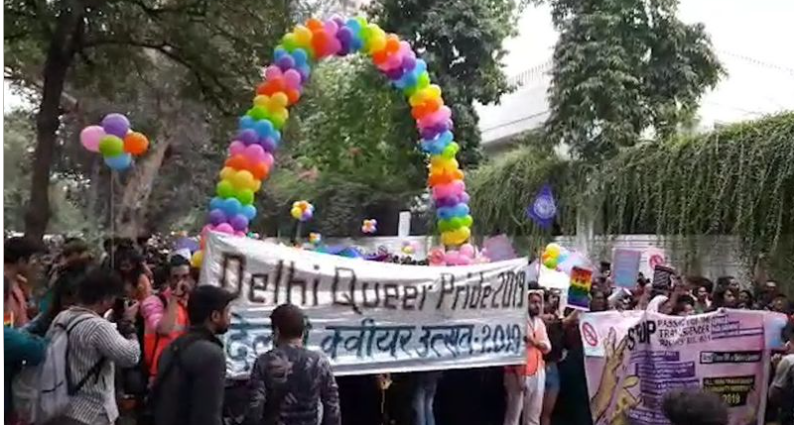
Delhi Queer Pride March, traditionally held in November, has been postponed this year amid concerns over the safety of the LGBTQIA+ community, restrictions on public protest and the changing political climate.
The decision has led to a wider debate within the community over the space available for dissent and whether concerns about safety should determine when people can take to the streets.
The organising collective, Delhi Queer Pride (DQP), announced the decision on Instagram on Wednesday, saying it followed months of internal discussions. It cited concerns surrounding the Transgender Amendment Act, restrictions on public protest and the well-being of participants. The collective subsequently clarified to ThePrint that the march had been postponed, not cancelled, and that it remained committed to organising it when circumstances allowed.
The decision comes against the backdrop of two significant developments. On October 11, Delhi Police denotified Jantar Mantar as a designated protest site, replacing it with three alternative venues away from the Capital’s central hub. Earlier, on March 30, President Droupadi Murmu gave assent to the Transgender Amendment Act, which removes self-identification of gender, narrows the definition of transgender and introduces penalties for coercing someone to adopt or present a transgender identity.
The postponement has nevertheless divided opinion within the queer community. Several members have questioned whether an increasingly restrictive environment should become a reason to defer public demonstrations, arguing that Pride derives its significance precisely from asserting visibility and rights in difficult circumstances.
“Pride was not created because we were allowed the space; we claimed it,” said a community member, a project manager at an NGO, describing the decision as a retreat at a time when solidarity and public resistance were particularly important.
LGBTQ+ rights watchdog ‘Yes, We Exist’ has also criticised the move as an act of self-censorship. Others have urged the organisers to explore alternative forms of protest rather than abandon public mobilisation.
However, the collective has maintained that organising a march also entails responsibility for participants, particularly those more vulnerable to violence. It said police coordination was important not merely for permission but also for managing movement through high-traffic areas and ensuring safe evacuation in an emergency.
Sharif Rangnekar, founder of Rainbow Lit Fest, said the decision was disappointing but cautioned against vilifying the organisers, pointing to the potential risks to participants.
This is not the first disruption to the annual November march. Last year, following discussions with Delhi Police over safety and weather conditions, it was moved to February 2026.
The latest postponement, however, has raised a more fundamental question: how can a community preserve Pride as an act of public resistance while ensuring that the people participating in it are not exposed to avoidable risks? For now, Pride March has left the date uncertain, but insists that the march remains on its agenda.