




With Punjab steadily moving towards the 2027 Assembly election, the race for the presidency of Shiromani Gurdwara Parbandhak Committee (SGPC), often called the “Mini Parliament of Sikhs”, is drawing increasing political attention.
SGPC’s annual presidential election is scheduled for November 20, making it one of the most closely watched Panthic events ahead of the state election. While the contest is being viewed through a religious lens, its outcome could also influence Punjab’s broader political landscape, particularly within the Shiromani Akali Dal (SAD)’s traditional support base.
Dhami seeks sixth term
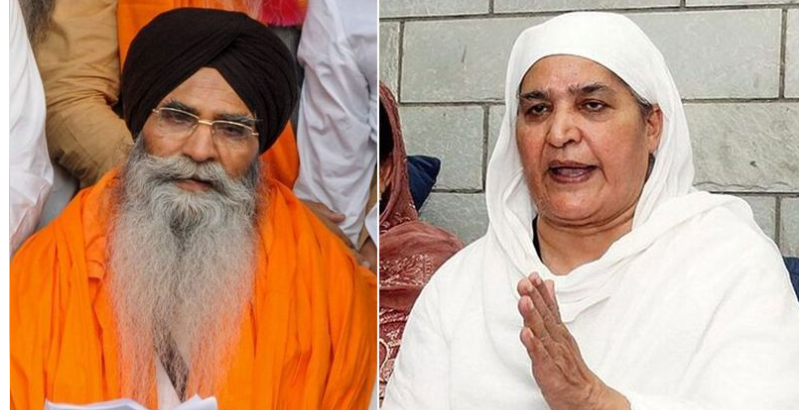
The spotlight is currently on whether incumbent SGPC president Harjinder Singh Dhami can secure a sixth consecutive term or whether former SGPC chief Bibi Jagir Kaur can stage a comeback.
Dhami, who has completed five successive terms, is widely regarded as a trusted organisational and legal strategist within SAD. His tenure has largely remained free from major controversies, helping him cultivate an image of stability and continuity at a time when the party is trying to rebuild its political fortunes.
Party insiders believe Dhami remains the natural choice for another term, particularly given the SAD leadership’s desire to avoid internal turbulence ahead of the Assembly polls.
Jagir Kaur’s return adds new dimension
However, the recent return of Bibi Jagir Kaur to SAD fold has added an element of uncertainty to the contest.
Political observers say Jagir Kaur appears more interested in reclaiming SGPC presidency than contesting the Bholath Assembly seat, where electoral equations have become increasingly challenging.
Speaking to The Tribune, Jagir Kaur said the final decision on her future role rests with SAD president Sukhbir Singh Badal.
“It is for Badal Sahib to decide my future course. I am prepared for both roles, whether religious or political,” she said, while indicating that a member of her family could also be interested in contesting the Bholath Assembly constituency.
Signs of a one-sided election, weak opposition
Despite speculation surrounding Jagir Kaur’s ambitions, the contest is increasingly being viewed as a largely one-sided affair.
With her now back in the SAD camp and rival Akali factions showing limited enthusiasm for mounting a serious challenge, the possibility of a consensus or near-unanimous election appears stronger than before.
The opposition camp has also been weakened by the absence of prominent dissident voices. Former challengers to SAD-backed candidates, Mithu Singh Kahnke and Jaswant Singh Puraine, continue to face restrictions on participating in SGPC affairs under directives issued by the Akal Takht.
The action stemmed from their association with Punjab Chief Minister Bhagwant Mann, whom the Akal Takht had earlier declared “Guru Dokhi” and “Panth Virodhi”. Although both leaders have sought forgiveness and submitted clarifications, their cases are yet to be finally decided.
Punar Surjit group plans Delhi protest
Meanwhile, the “Punar Surjit” group led by former acting Akal Takht Jathedar Giani Harpreet Singh has announced a protest march outside Parliament in New Delhi on November 20.
Headed by former SGPC president Gobind Singh Longowal, the group plans to raise two key demands: the holding of long-pending SGPC general election and the release of Sikh prisoners who have completed their jail terms.
The timing of the protest coincides with SGPC presidential election, ensuring that questions surrounding Panthic representation and institutional accountability remain part of the larger conversation.
Why SGPC matters
Experts argue that SGPC remains one of the most influential institutions in Sikh religious and political life.
Dr Amarjit Singh, Director of the Sikh Studies Chair at Guru Nanak Dev University, said SGPC functions as a parallel power centre through its vast network of gurdwaras, educational institutions, charitable organisations, financial resources and social outreach programmes.
However, he noted that SGPC’s direct political impact would have been far greater had general election to the body been held.
“The SGPC general election is pending since 2011. What is expected now is essentially the election of a president by the existing House, where the Sukhbir Singh Badal-led camp continues to enjoy a dominant position,” he said.
Referring to reports of a possible SAD-BJP rapprochement ahead of the Assembly poll, he added that the Akali leadership may look for a candidate who is acceptable across different sections of the Panthic spectrum.
Prof Ashutosh Kumar of Department of Political Science, Panjab University, said SGPC’s political significance extends beyond religious administration.
“The group that controls SGPC is widely perceived as the ‘official’ Akali Dal, irrespective of electoral setbacks,” he said.
Describing SGPC as the “major resource and oxygen” for the Akali Dal, Prof Kumar said retaining control of the institution enables the party to preserve its influence within Sikh religious and organisational networks.
He also argued that one of the major reasons for SAD’s decline was the perception that its leadership compromised the autonomy and sanctity of institutions such as the Akal Takht and SGPC, leading to erosion of support among sections of its traditional vote bank.
SGPC House members
The General House of SGPC officially consists of 191 members, including 170 elected members and 15 co-opted (nominated) members, and six ex-officio members including the Jathedars (head priests) of the five Takhts and the Head Granthi of Sri Harmandir Sahib. These six members do not hold voting rights during SGPC election.
At present, sources estimate that the active voting pool has shrunk from 185 to around 138 who will elect the president and other office-bearers, as around 39 have died and five to six members are no longer active because they have either resigned from their posts or lost their voting rights.