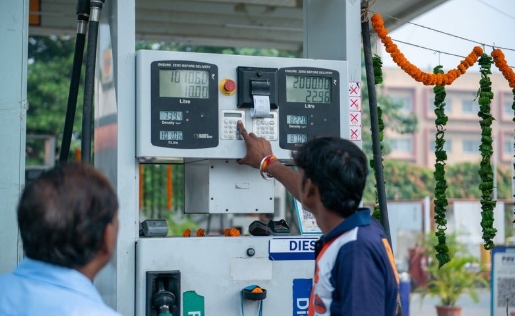
In view of the stringent measures being implemented to control air pollution in the Delhi-NCR region, the Haryana Transport Department has directed all petrol pump operators and retail outlets in the NCR districts of the state to ensure that a valid Pollution Under Control Certificate (PUCC) is verified before refuelling vehicles.
The directions have been issued in accordance with Direction No. 101 of the Commission for Air Quality Management (CAQM), under which the “No PUC, No Fuel” rule came into effect across Delhi and the National Capital Region (NCR) from October 1, 2026.
As part of the comprehensive measures being undertaken by the Haryana government to curb vehicular pollution, including the deployment and implementation of Automatic Number Plate Recognition (ANPR) camera systems at petrol pumps across the NCR districts, strict enforcement of emission norms has been prioritised.
Under the directions, petrol, diesel and CNG stations are required to deny fuel to vehicles that do not possess a valid PUCC. Fuel stations will verify the vehicle registration number against the online PUC database through ANPR cameras.
Pending the full installation and operationalisation of ANPR cameras across all NCR districts, petrol pump owners have been directed to ensure that their staff manually verify the validity of the PUCC of every vehicle before dispensing fuel. If a vehicle owner or driver fails to produce a valid PUCC, fuel must be denied immediately, and the vehicle registration number must be recorded for official purposes.
The Transport Department has also directed petrol pump operators to ensure that vehicles without a valid PUCC are immediately directed to the nearest authorised PUC testing centre at or near the retail outlet to obtain the requisite certificate before refuelling.
Furthermore, all petrol pumps have been instructed to install clear and prominently displayed bilingual warning boards in English and Hindi at all entry points and fuel dispensing units. The boards will clearly state: “No Valid PUC Certificate – No Fuel Refilling. Ensure valid PUC to avoid e-challan/penal action.”
The department has also highlighted that driving or operating a vehicle without a valid PUC may attract a fine of up to Rs 10,000 under the applicable Motor Vehicle Rules.
The Transport Department has directed all concerned authorities and petrol pump operators to comply with CAQM Direction No. 101 in letter and spirit. Any laxity in implementation will invite strict punitive action.
Direction 101 issued by the Commission for Air Quality Management (CAQM) on May 15, 2026, clarifies that fuelling without a valid PUCC may be permitted in exceptional circumstances, such as medical emergencies, law-and-order duties, disaster response operations, or such other circumstances as may be specified by the Government of the National Capital Territory of Delhi (GNCTD) or the NCR state governments.
Non-compliance with the directions of the Commission shall attract penal action under Section 14 of the Commission for Air Quality Management in NCR and Adjoining Areas Act, 2021.
Section 14 provides that non-compliance with the directions shall constitute an offence punishable with imprisonment for a term that may extend to five years, or with a fine that may extend to ₹1 crore, or with both.
Why was such a direction issued?
- The NCR continues to experience adverse air quality conditions, particularly during the winter months, and PM2.5 remains the predominant pollutant determining the Air Quality Index (AQI) in the region.
- Vehicular emissions are a significant contributor to PM2.5 and NOx levels in the NCR, accounting for approximately 23% of the PM2.5 load during the winter months and about 18% during the summer months, according to the CAQM.
- The Central Motor Vehicles Rules, 1989, mandate that every motor vehicle, after the expiry of one year from the date of its first registration, shall carry a valid PUCC.
- A substantial number of vehicles continue to ply without a valid PUCC, thereby undermining statutory emission-control requirements and contributing to avoidable vehicular pollution, according to the CAQM.
- The Automated Number Plate Recognition (ANPR) system, integrated with VAHAN—the centralised national digital repository that stores vehicle registration details—and the PUCC database, enables the real-time identification of vehicles without a valid PUCC and facilitates efficient and transparent enforcement of emission-compliance requirements.