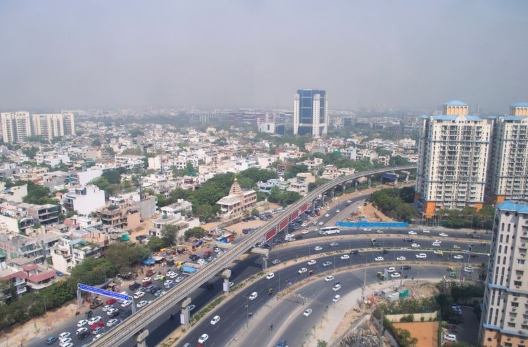
Haryana is set to flip its land use rulebook. Instead of listing what is allowed in each zone, the state plans to list only what is banned. The principle is “everything is permitted until prohibited,” and it could change how homes, shops, offices and factories are approved across the state, from Gurugram and Faridabad to Sonepat, Panchkula and Hisar.
A public notice issued by the Town and Country Planning Department on September 30 proposes replacing the permissible-activities list (Appendix B) in the zoning regulations of development plans with a prohibited-activities list. Appendix A of the Explanatory Note of all published development plans will be deleted. The move follows Phase-2 of the Centre’s compliance reduction and de-regulation exercise, which promotes “demand driven” land uses.
What it means for the common man
Until now, an activity had to figure on the permitted list for its zone. A new business or startup outside that list could wait months for separate permission. Under the proposal, anything not on the prohibited list could be allowed, with construction approvals following, subject to prevailing policy parameters.
What it means for Gurugram
Gurugram’s mix of dense residential sectors, commercial strips and corporate hubs makes it the likeliest place to feel the change first. Small shops, cafes, PGs and home-based businesses in residential sectors, which have often lived under the threat of sealing drives, could get a clearer path to approval. Residents’ welfare associations may push back if commercial activity grows in sectors planned as purely residential.
What it means for Faridabad
Faridabad, with its industrial belt and crowded residential colonies, could see similar pressure on land use. Factories and workshops cannot come up in residential zones, since industries are on the proposed banned list, but other small commercial activity may find it easier to operate.
What stays banned
As per the proposed lists, residential zones will bar industries, IT parks, data centres, warehouses, logistics parks and transport nagars. Commercial zones will bar residential colonies, major industries, IT parks and data centres.
Agriculture zones will bar residential and commercial colonies, red category industries and IT establishments, but data centres are specifically exempted. That could draw investor interest to land on the fringes of Gurugram, Sonipat and other expanding urban belts, though power, water and licensing norms will matter.
Who is covered
The amendment applies to development plans under the Haryana Scheduled Roads and Controlled Areas Restriction of Unregulated Development Act, 1963, the municipal corporation and municipal Acts, and the metropolitan development authority Acts for Gurugram, Faridabad, Panchkula, Sonepat and Hisar.
Concerns
Town planners and resident bodies may ask how traffic, parking, noise and civic infrastructure will cope once the permitted list goes, and how farmland and green belts will be protected.
Not final yet
Objections and suggestions can be sent to the Chief Coordinator Planner (NCR), Town and Country Planning Department, Nagar Yojana Bhawan, Sector 18A, Chandigarh, or emailed to ccpncrhry.zrobjections@gmail.com. The government will consider them after 30 days, around October 30.
The public notice issued by the Town and Country Planning Department on September 30.