Raksha Bandhan 2026 Date: The festival of Raksha Bandhan is considered a symbol of brother-sister love and mutual affection. On this day, sisters tie Rakhi on the wrist of the brother and wish him a happy and prosperous life. But it is often seen that after the passage of Rakshabandhan, people are confused about how long Rakhi should be tied on the wrist and what is the right way to take it off? Let us know what are the rules mentioned in the scriptures regarding the removal and immersion of Rakhi.
When will Raksha Bandhan be celebrated in 2026?
According to the Drik Panchang, in the year 2026, the Shravan Purnima date will start on August 27 at 9:09 am. At the same time, the Purnima Tithi will end on August 28 at 9.48 am. On the basis of Udaya Tithi, the festival of Raksha Bandhan will be celebrated on Friday, August 28, 2026.
When to remove Rakhi after Raksha Bandhan?
There is no fixed day mentioned everywhere in the scriptures to take down Rakhi, according to religious beliefs, it is considered auspicious to keep Rakhi on the wrist for at least one day i.e. about 24 hours. In some families, it is customary to keep it for 3 to 7 days. At the same time, in some places, the belief of keeping Rakhi on the wrist till Janmashtami is also prevalent.
Can I take off Rakhi on Janmashtami?
Shri Krishna Janmashtami comes a few days after Raksha Bandhan. In some traditions, it is believed to take down Rakhi on the day of Janmashtami. Behind such a belief is the faith in Lord Krishna and the feeling of respectfully applying the Raksha Sutra. However, this cannot be considered a necessary rule for everyone. Therefore, families who have a tradition of taking down Rakhi on Janmashtami can take off Rakhi after Puja.
What should be kept in mind while removing Rakhi?
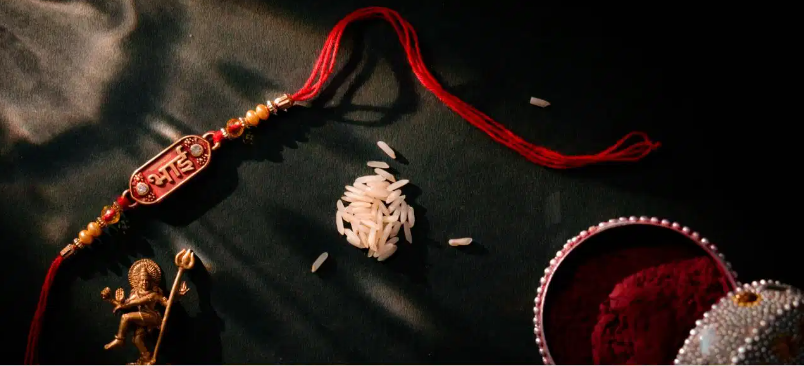
It is not considered appropriate to throw Rakhi anywhere considering it as just a common thread. In religious beliefs, it has been given the status of Raksha Sutra, so there is a tradition of respectfully removing it. Before taking off the rakhi, take a bath and remember God and after that open the rakhi with a calm mind.
What to do with the discarded rakhi?
After removing the rakhi, it should be avoided by throwing it in the trash. According to religious belief, there is a tradition of keeping the old Rakhi respectfully or immersing it properly. If you want to keep Rakhi safe, then you can wrap it in a clean cloth and keep it in a place of worship or a clean place. At the same time, it is also believed to immerse Rakhi made of natural material in some clean running water.
What is the religious significance of Rakhi?
Rakhi is considered a symbol of brother-sister relationship and the resolve to protect. When the sister ties a rakhi on the wrist of the brother, she wishes him good health, happiness and prosperity. The brother also promises to protect the sister and support her in every situation. Due to this feeling, it is said that the tradition of keeping respect for Rakhi even while taking it down.
Also read: Why Rakhi is not tied during Bhadra period? Ravana was destroyed
Disclaimer: The information provided in this news is based on religious beliefs and general information. TV9 Bharatvarsha does not confirm this.
He has more than a decade of experience in electronic and digital media. After completing a journalism course from the Asian Academy of Film and Television (AAFT) Noida in 2008, I started my journey in media with the idea of doing something different and innovative. During his career, he had the opportunity to work in reputed media organizations like Channel One News, Sahara Samay, A2Z News, News Express, National Voice and Punjab Kesari Digital. While working in these institutes, I got the experience of learning news writing, field reporting, and digital content. At present, in the country’s largest news network TV9 Bharatvarsh, I am fulfilling the responsibility of bringing news related to religion and faith, religious events, astrology, Vastu, mythology, traditions of temples and fasts and festivals to the readers in simple, easy and factual language. The coverage of Mahakumbh 2025 has been one of the most important experiences of my career, where I had the opportunity to write extensively on the faith of crores of devotees, the traditions of the Akharas, the activities of the Sant Samaj and the religious and cultural aspects associated with the Kumbh. Apart from this, he has also written continuously on Chardham Yatra, Sawan, Navratri, Deepawali, Holi, Chhath Puja, Amarnath Yatra, Ramzan and other major religious events. I have a special interest in the study of Indian culture, religion, astrology, numerology, Vastu Shastra, Puranas and folk beliefs. It has always been my endeavour to convey religious and spiritual topics to the readers through simple language, so that they can better understand their traditions and cultural heritage.