





Former finance minister and INLD leader Sampat Singh filed his own appeal before Appellate Tribunal on October 28 to challenge the Haryana Electricity Regulatory Commission (HERC) order and also urged the employees organisations and consumer interest bodies to file similar appeals.
Notably, the Eleven Power Private Limited has also moved the Appellate Tribunal for Electricity to pursue legal remedies in the wake of Haryana government invoking Section 108(1) in connection with HERC’s October 19 offering to grant a 25-year parallel electricity distribution licence to private firm for Gurugram and Nuh.
Singh said that despite the temporary relief, critical questions remain unanswered. “The state government must clarify if the Section 108 directions were backed by a formal decision of the Council of Ministers under government business rules, rather than relying solely on Chief Minister assurances,” he said.
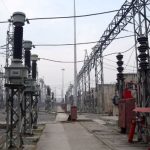
The HERC’s grant of the 25-year licence on October 19 to private firm has triggered a massive statewide protest. Approximately 40,000 electricity engineers and employees went on strike, bringing power services to the brink of total collapse. Lakhs of consumers suffered as industrial production halted, water supplies were disrupted and public life came to a standstill, pushing Haryana toward a virtual blackout.
Prof. Singh revealed that his timely counsel averted a deeper crisis. At the height of the crisis, he advised the government to immediately invoke Section 108 of the Electricity Act, 2003, to issue policy directions to HERC in the public interest, rather than wasting time on lengthy Section 94 review proceedings. Acting on this advice, HERC issued an order on October 28 halting further proceedings on the licence while the government directions remain operative.
He further questioned the HERC as to why it had failed to communicate mandatory public-interest considerations under Section 86(2) regarding competition, investment and restructuring to the state government.
He criticised the authorities for failing to translate its promises into proactive action before the state was plunged into crisis.
Calling the issue a ‘battle for the state’s future’, Prof. Singh warned that allowing private entities to siphon off profitable industrial and commercial consumers in Gurugram and Nuh—while public DISCOMs shoulder rural electrification, agriculture, and social obligations—will destroy public utility financial viability.
Stressing that Haryana’s public electricity system must not fall victim to private commercial interests, Prof. Singh urged electricity employees to remain united and alert, noting that the government’s temporary intervention is not a permanent solution.
He said the INLD would go to any length to protect the interests of farmers, consumers, employees and the people of Haryana.