





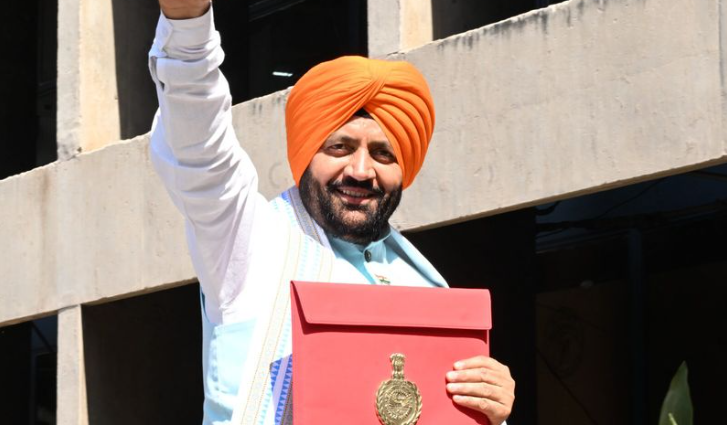
The pro-Punjab political undertones in the Haryana Budget, presented on March 2 by Chief Minister Nayab Singh Saini, were not lost on anyone in the region.
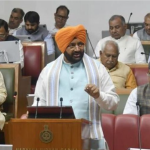
Sporting a ‘kesari’ turban, amid chants of “Bole So Nihal”, the Haryana CM presented his Budget proposals — which analysed politically — send a message to Punjab on how a “double-engine” government can give a fillip to the state’s economy.
The political message of the Budget for poll-bound Punjab is all the more significant as Saini is more or less leading the Bharatiya Janata Party’s political foray into Punjab, wooing farmers and the politically important voter segment of women. Political observers in Punjab are terming the Haryana Budget as a “soft launch” of the BJP campaign for Punjab, where elections are due in 2027.
A closer look at the Budget shows that welfare schemes offered to the natives of neighbouring Haryana have a comparison trap for the Aam Aadmi Party (AAP) government in Punjab, which is going to present its final Budget of the current tenure before the polls.
Considering the limited fiscal space that the state has, the Punjab Government is stretching all its resources to ensure that they give Rs 1,000 per month honorarium to every woman. To do so, without filtering out the economically well-off women, the state will need Rs 1,000 crore per month. The state Finance Department is scraping the barrel to ensure it has enough reserves to roll out the scheme, which will help them consolidate the 48 per cent vote share of women.
This, however, has been countered by Haryana through their Deen Dyal Lado Lakshmi Yojana, which assures Rs 2,100 per month to women from low-income households.
For farmers, the other major segment of voters, the Haryana Government has proposed crop diversification bonuses, not touched on the emotive issue of Sutlej-Yamuna Link (SYL) Canal in the Budget and announced a separate power distribution company for agriculture feeders.
Comparatively, the AAP Government in Punjab, which stormed to power in 2022 riding on support from farmers, especially in the politically significant Malwa region, has been at loggerheads with farmer unions for over a year now.
The much-awaited Agriculture Policy has not been announced and no one in the government seems to be talking to the farmers on any of the issues, meaning a thaw in relations is nowhere in sight.
The third major factor was Saini’s cultural and religious outreach in his Budget speech. It wasn’t just the turban he wore, but his speech was interspersed with verses of Gurbani and he made mention of Guru Ravidas — undoubtedly trying to reach out to both, the Sikhs and the Dalits.
The AAP, which according to a survey by Lokniti bagged 47 per cent of the Sikh votes in 2022, has so far not found much favour with them for its failure to deliver justice in the sacrilege cases, and the missing saroops case.
Also, while Saini is himself an OBC leader and makes frequent forays into Punjab, chairing functions of OBC and Dalit groups, the AAP has so far failed to project a tall Dalit leader, or fulfill its earlier promise a Dalit deputy chief minister.