








New Delhi
Delhi EV Policy 2.0 Explained: The air in Delhi now carries not just the chill of winter, but also a palpable sense of unease. The morning sky is often shrouded not in mist, but in a blanket of smoke. The aging vehicles racing across the roads are doing more than just traversing a route; they are stifling the very breath of the city. In response to this situation, the government has made a strategic move—dubbed EV Policy 2.0. Instead of focusing solely on direct subsidies, the emphasis has now shifted to phasing out old, smoke-belching vehicles. The message is clear: the older the vehicle, the stricter the regulations applied to it; conversely, the easier the path will be for those who embrace electric mobility.
In November of last year, the Supreme Court directed the Central Government to review and update the Electric Vehicle (EV) Policy originally formulated in 2020. The Court observed that significant advancements in technology and policy frameworks have taken place over the last five years, necessitating the formulation of a fresh and comprehensive policy. According to sources, the Central Government is currently considering extending the subsidies available for electric two-wheelers (scooters and bikes) and three-wheelers (autos and e-rickshaws) under the ‘PM E-DRIVE’ scheme beyond the current deadline of March 31, 2026. Reports indicate that this matter was reviewed by the Prime Minister’s Office (PMO) earlier this week.
According to a report by *Business Today*, this proposal—initiated by the Ministry of Heavy Industries (MHI)—has now been forwarded to the Ministry of Finance. Further action on this matter was taken following a review meeting held at the Prime Minister’s Office (PMO) on Monday, during which discussions focused on the utilization of funds and the pace of adoption of electric vehicles across various segments.
Meanwhile, as part of the Delhi Budget 2026, the government led by Rekha Gupta has unveiled the blueprint for the state’s new Electric Vehicle Policy (EV Policy 2.0). This framework proposes a set of new regulations, ranging from financial incentives to tax exemptions. So, let’s find out what Delhi’s new EV Policy is all about –
**What is Delhi’s New EV Policy?**
In the new EV Policy 2.0 introduced by the Delhi government, greater emphasis has now been placed on scrapping old vehicles rather than merely providing direct subsidies. The aim is to boost electric mobility within the capital city. Through this new policy, the Delhi government has focused on phasing out old and highly polluting vehicles. A budgetary allocation of ₹200 crore has been earmarked for this purpose in the 2026 budget. The objective of this new policy is to reduce pollution by removing old vehicles from Delhi’s roads and to promote the adoption of electric vehicles.
The most significant change introduced in the new policy is that the maximum benefits will now accrue to those individuals who choose to scrap their old vehicles. To avail of this benefit, a buyer must provide proof that they have scrapped a petrol or diesel vehicle—specifically a BS-IV model or older—that was registered in Delhi. Only upon furnishing such proof will they be eligible to receive the enhanced incentives.
**How Much Subsidy Will Be Available Under the New Policy?**
The government has established a new subsidy structure tailored to each specific vehicle segment. For the first year, the government has simplified the incentive mechanism. Private electric vehicles priced up to ₹15 lakh will be eligible for a subsidy of up to ₹1 lakh; however, this benefit will be limited to the first 100,000 customers. For electric two-wheelers, a direct rebate of ₹10,000 will now be provided, rather than the subsidy being determined based on battery capacity—as was the case previously (though even under the old system, a maximum subsidy cap was in place). Meanwhile, electric three-wheelers (L5M category) will receive a benefit of ₹25,000.
The government has also incorporated a new option into this policy: if an individual chooses to convert their existing petrol or diesel car into an electric vehicle, they will be provided with financial assistance of ₹50,000.
**Road Tax and Registration**
In Delhi, electric vehicles will continue to enjoy a 100% exemption from Road Tax and Registration Fees until March 2030. However, a specific cap has now been introduced regarding this exemption. Electric vehicles priced up to ₹30 lakh will remain completely tax-free, whereas regular tax rates will apply to vehicles exceeding this price threshold. **Focus on Public Transport**
In addition to private vehicles, the government has placed strong emphasis on electrifying public transport as well. According to the new policy, 6,130 new electric buses are set to be deployed on the roads during the 2026-27 fiscal year. A total target of 7,500 buses has been set for March 2027, of which 5,800 will be electric buses. Furthermore, an ambitious target of 12,000 electric buses has been established for the year 2029.
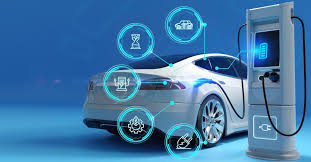
The government has stated that charging infrastructure will also be rapidly expanded. In Delhi, it will be mandatory for every vehicle dealership to install at least one public charging point. The government aims to establish 18,000 charging stations by the end of 2026.
Given the growing number of electric vehicles, a system for battery recycling (for reuse purposes) is also being developed. The Delhi Pollution Control Committee will oversee this initiative. Plans are in place to spend ₹320 crore on converting bus depots into electric depots and upgrading other associated facilities. Additionally, five new automated testing stations will be constructed at DTC depots at a cost of ₹50 crore.
This new EV policy is an integral part of a larger transportation plan. The new policy incorporates Direct Benefit Transfer (DBT) and Aadhaar-based e-KYC mechanisms, which will reduce the time required to receive subsidies from 40 days to less than a week. This will ensure that citizens receive benefits more quickly and will also simplify the overall process. Thus, Delhi’s EV Policy 2.0 is poised to not only promote electric vehicles but also serve as a significant step toward curbing pollution and making the city cleaner.