







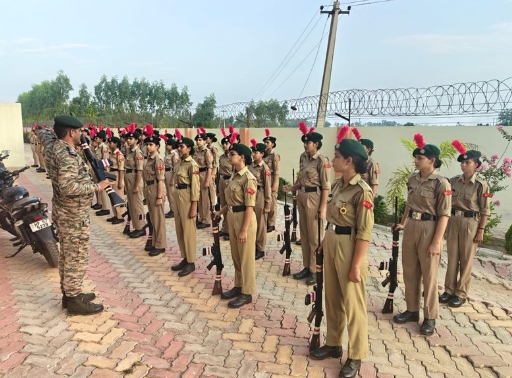
The state government has introduced a new creditisation scheme that will allow undergraduate and postgraduate students to earn academic credits for activities beyond the conventional classroom. The scheme covers NCC, NSS, sports and yogasan, cultural activities, Youth Red Cross, incubation and outreach programmes, besides certain informal learning activities. The guidelines, issued by the Higher Education Department recently, apply to state universities and government, aided and private colleges in Haryana.
What is the new creditisation scheme?
The scheme allows students to receive academic credits for verified participation and achievements in selected co-curricular, community-service and experiential-learning activities. It has been aligned with the National Education Policy-2020, National Credit Framework and Academic Bank of Credits system. The credits earned will be recorded in the Academic Bank of Credits, subject to university rules and verification.
How many academic credits can a student earn?
A student can earn up to six credits through eligible activities during a three- or four-year undergraduate programme, while the ceiling is four credits for a two-year postgraduate programme. As a general benchmark, one credit represents 30 hours of verified field work, practice or participation. The ceiling, however, varies according to the activity. NCC, sports, cultural activities, incubation and outreach carry a maximum of six credits, while NSS and Youth Red Cross carry four credits each.
Which activities qualify for credits?
The guidelines cover NCC, NSS, sports and yogasan, cultural activities, Youth Red Cross, incubation/entrepreneurship and outreach activities. Students can also claim up to two credits for eligible informal learning during their entire programme. Such learning may include certified online courses, independent projects, portfolios and other documented self-learning activities.
Will every participation automatically fetch credits?
No. Students will have to fill a form to claim credits for eligible non-formal or informal learning activities. They have to establish their participation and learning outcomes through documentary evidence. Depending on the activity, this may include certificates, attendance records, logbooks, reports, portfolios, result sheets, mentor notes or other proof. An assessment committee will verify the claims and award grades based on prescribed criteria. The university’s competent authority will approve the credits before their entry into institutional records or the Academic Bank of Credits.
Who will benefit from the scheme and what is its purpose?
The scheme seeks to formally recognise experiential learning, community service, entrepreneurship and other skills as part of students’ academic journey. It applies to students enrolled in three- and four-year UG and one- and two-year PG programmes in higher educational institutions. The 2026-27 Budget announcement specifically said the integration of NCC, NSS, sports and yogasan into the Academic Credit Bank would benefit 25,000 NCC and 70,000 NSS students. The broader guidelines seek to recognise skills such as leadership, teamwork, discipline, community engagement, creativity, innovation, entrepreneurship and problem-solving as part of higher education.