


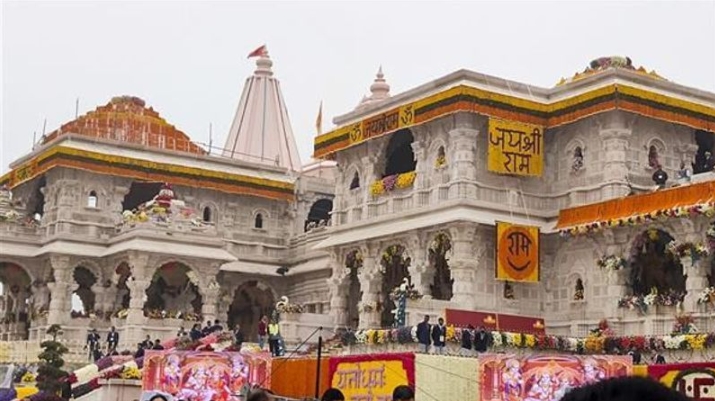
Has the Ayodhya Ram Temple been built on the exact piece of land and premises adjudicated upon by the Supreme Court in its 2019 verdict?
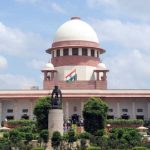
Almost seven years after a five-judge Constitution Bench of the Supreme Court paved the way for the construction of the Ram Temple by a trust at the disputed site in Ayodhya, a plea in the Supreme Court has sought the constitution of a committee/commission to determine if the stood on the exact premises and land adjudicated upon by the top court.
In a landmark November 9, 2019, judgment, a five-judge Constitution Bench of the Supreme Court paved the way for the construction of the Ram Temple by a trust at the disputed site at Ayodhya and directed the Centre to allot an alternative five-acre plot to the Sunni Waqf Board for building a new mosque at a “prominent” place in the holy town in Uttar Pradesh.
In a unanimous verdict, the top court had ruled that the 2.77 acres of disputed land where the demolished Babri Masjid once stood would remain with a central government receiver and be handed over to a trust within three months for construction of the temple.
Now, Shri Ram Janmabhoomi Case Trust has sought a direction for an independent survey or demarcation of the premises adjudicated in the 2019 verdict, including identification of the exact boundaries, coordinates, extent and location of the land to which the judgment and decree relates.
The Trust’s plea is scheduled to come up for hearing on November 2 before a Bench of Chief Justice Surya Kant, Justice Joymalya Bagchi and JusticeV Mohana.
“Direct constitution of an appropriate independent court-appointed committee/commission, comprising such qualified survey, revenue, archaeological and other technical experts as this court may deem fit, for the purpose of determining whether the temple presently constructed/developed is situated upon the exact premises and land adjudicated by this court,” the Trust demanded.
It said upon such verification, if any material discrepancies is found between the premises adjudicated by the top court and the premises upon which the temple was constructed, then appropriate directions be given to ensure that the mandate of the 2019 verdict is faithfully implemented.
The petition sought directions to the authorities concerned and the Shri Ram Janmbhoomi Teerth Kshetra Trust to preserve and produce before the court all original documents, maps, plans, surveys and records relating to identification, demarcation and development of the temple premises.
It also sought direction for construction of facilities for devotees who are coming there from all over the world.
Besides other prayers, the plea has sought directions to digitise donations, offerings and receipts on a daily basis with continuous display, and annual audit of the account by the Comptroller and Auditor General of India to avoid misappropriation.
The Babri Masjid, a 16th-century mosque, stood on the disputed site in Ayodhya before it was demolished by Hindu kar sevaks on December 6, 1992, triggering communal riots.
The 2019 verdict came on 14 appeals filed in the apex court against the 2010 Allahabad High Court judgment, delivered in four civil suits, that the 2.77-acre land in Ayodhya be partitioned equally among the three parties—the Sunni Waqf Board, the Nirmohi Akhara and ‘Ram Lalla’.