


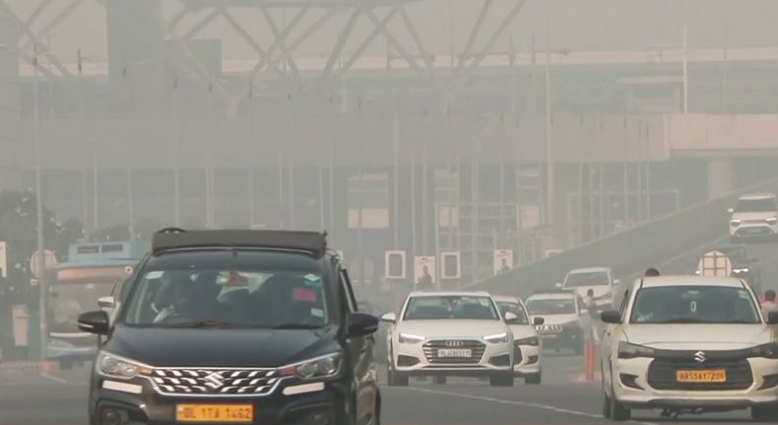
With winter pollution intensifying in Delhi-NCR, Union Environment Minister Bhupender Yadav has directed the states of Delhi, Haryana, Uttar Pradesh and Rajasthan to step up enforcement of pollution control measures, warning of action against officials and agencies failing to meet deadlines.
Chairing a review meeting on Saturday, Yadav directed the Central Pollution Control Board (CPCB) to immediately seal 191 identified polluting industries that have not even placed orders for installing Air Pollution Control Devices (APCDs), despite repeated directions.
He also warned that the Commission for Air Quality Management (CAQM) would initiate criminal prosecution against Transport Department officials in states that fail to install Automatic Number Plate Recognition (ANPR) cameras by November 30.
Emphasising that air pollution does not recognise state boundaries, the Minister called for coordinated and time-bound enforcement across the National Capital Region (NCR), moving beyond planning to visible action on the ground.
The states were directed to nominate Secretary-level officers for 15 cities — seven in Haryana, four in Uttar Pradesh and four in Rajasthan — to oversee pollution control measures through field inspections and submit weekly progress reports to the CAQM. The commission was asked to issue notices to non-performing officers.
Yadav said more than 30 review meetings had been held with NCR state governments and municipal bodies over the past year to strengthen pollution preparedness and implementation of action plans.
Reviewing road dust management, the Minister noted that only 3,221 km of the targeted 5,480 km of roads had been redeveloped. He directed agencies to expedite pothole repairs, pave road shoulders and central verges, intensify mechanical sweeping and undertake deep-cleaning drives. Traffic congestion at 233 identified points across NCR was also flagged for immediate attention.
The Municipal Corporation of Delhi (MCD) was asked to complete the installation of Multi-Lane Free Flow systems at 154 Delhi border entry points by December 31.
On vehicular pollution, Yadav called for expediting the PARIVARTAN scheme to replace pre-BS-VI trucks and buses with BS-VI, CNG and electric vehicles by 2028. States were also asked to accelerate the installation of ANPR-based monitoring systems at fuel stations, linked to VAHAN and pollution-under-control certificate databases.
Of the 2,345 targeted industries in NCR, 2,298 (98 per cent) have been connected to Online Continuous Emission Monitoring Systems (OCEMS). The Minister stressed strict enforcement of the particulate matter emission limit of 50 mg/Nm³, with closure, electricity disconnection and sealing of non-compliant units.
He also directed states to bridge the 6,747-tonne-per-day gap in municipal solid waste processing capacity, prevent open dumping and burning, and expedite the clearance of legacy waste at Okhla, Ghazipur, Bhalswa and Bandhwari.
The Minister called for focused hotspot action plans covering markets, schools, hospitals, railway stations and bus terminals, besides strict implementation of the Graded Response Action Plan (GRAP) and winter action plans.
Highlighting technology-led monitoring, Yadav cited Delhi’s Integrated Command and Control Centre and CAQM’s PAVAN platform for real-time tracking of pollution, emissions and compliance. He also called for greater public participation through awareness campaigns involving resident welfare associations, transport bodies and the construction industry.
Yadav, along with state environment ministers, will undertake regular field inspections to assess implementation of the measures.